
Spray Shell installs spray-applied polyurea — a 100%-solids elastomer that gels in seconds, bonds to concrete, steel and fiberglass, and turns cracked sumps, pitted slabs and worn truck beds into one continuous, liquid-tight shell.
Polyurea is sprayed hot at high pressure from plural-component equipment and cures in seconds into a tough, flexible membrane. That makes it the practical choice anywhere a surface has to stay liquid-tight, take abuse, and get back to work fast.
Spill buckets, dispenser and tank-top sumps, forecourt slabs, canopy decks — lined and repaired so they hold water and pass the test.
Learn more →Seamless membranes over concrete dikes, pits and berms for fuel, chemical and wastewater.
Learn more →Spray-in bed liners, dump bodies, trailer floors and walls, utility bodies.
Learn more →Shop floors, wash bays, loading docks, roof decks, walkways and stairs.
Learn more →Mower decks, implements, spreaders, livestock trailers, barn floors, bins and troughs — corrosion, chip and chemical protection.
Learn more →Spray Shell's background is fuel-site work. Under the federal UST rule, spill buckets and containment sumps used for interstitial monitoring have to be tested for liquid tightness at least every three years, and any repair to spill or overfill equipment or secondary containment has to be retested within 30 days [3][4]. A sump that has cracked, delaminated or lost its boots is a sump that fails that test — and a failed test is a compliance clock.
Spray polyurea can be applied to sound, properly prepared sump and spill-bucket interiors and forecourt concrete as a seamless, chemical-resistant membrane that cures fast enough to keep the site pumping. Every repair is performed per the applicable manufacturer or industry code of practice and is followed by the required integrity test before the equipment goes back into service [4][5].
Values below are typical ranges published by major polyurea manufacturers for pure polyurea liner systems. The exact system for your job is selected to match the substrate, chemical exposure and service conditions.
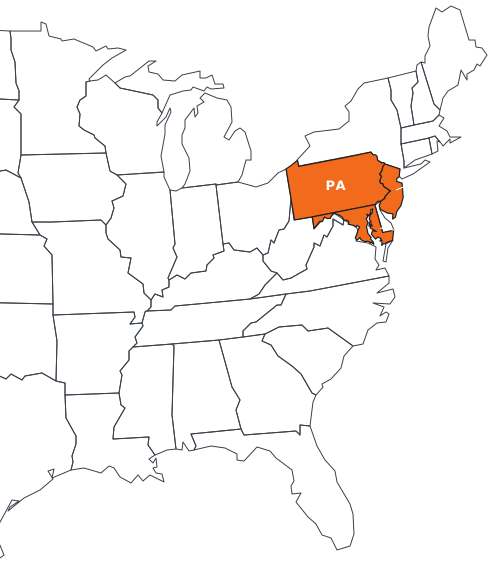
Local service pages for each state, with regional coverage building out over time. Multi-site and out-of-region projects across the USA are quoted individually.
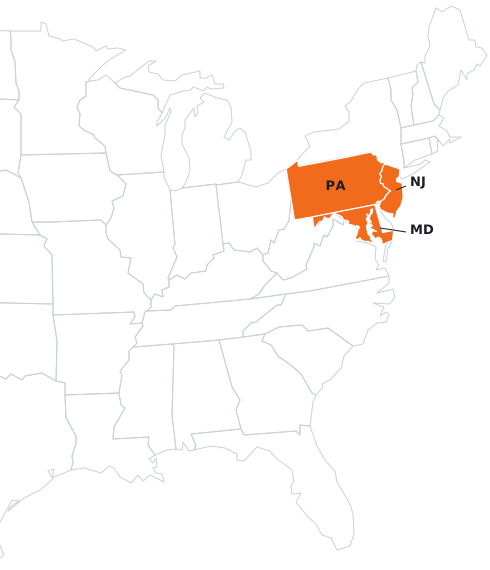

Philadelphia, Pittsburgh, Harrisburg, Lehigh Valley, Scranton/Wilkes-Barre and statewide. PA DEP Chapter 245 facilities.
View Pennsylvania →
North, Central and South Jersey — Turnpike and Parkway corridors. NJDEP N.J.A.C. 7:14B facilities.
View New Jersey →
Baltimore, Annapolis, Frederick, the I-95/I-270 corridors and the Eastern Shore. MDE COMAR 26.10 facilities.
View Maryland →Owner-operated spray polyurea installer with a background in gas station repair. Plural-component spray equipment, mobile to the job site.
Owner-operatedFuel-site experiencePlural-component spray
Call with rough dimensions of the sump, tank, floor or truck and what it's exposed to. We'll come back with the system, thickness and a schedule.
Call 301-215-3551Call with the site details. Spray Shell can scope the job, confirm the right system, and give you a plan for minimal downtime.
Call 301-215-3551 Contact page